Israeli Holidays in London: How the Chagim Are Marked Here
Chag by chag, how Israelis mark the year in London, from Yom Hazikaron and the autumn holidays through Chanukah, Purim and Pesach, and where to go for each one.

HBayit Community
There is a particular quiet that falls on a London flat when a chag arrives and the street outside carries on as normal. At home the whole country leans into the same day at once. Here the buses run, the shops open, and the calendar that used to hold your year belongs suddenly to you alone. This is a chag by chag guide to how the year is marked in London, and where to go for each one.
Yom Hazikaron and Yom Ha’atzmaut, back to back
Ask an Israeli abroad which days land hardest and many will name these two. At home the siren stops the traffic, the country stands still, and then within a single evening the grief tips over into fireworks and singing. That handbrake turn is almost impossible to explain to anyone who did not grow up inside it, and almost impossible to feel alone in a foreign city.
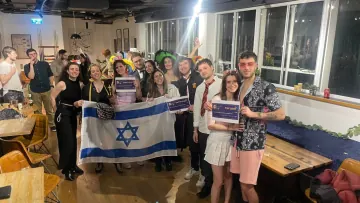
So the community holds both. A Yom Hazikaron ceremony in Hebrew, with the songs and the readings and the names, in a room where nobody needs an explanation for wet eyes. And the next evening Yom Ha’atzmaut, the flags and the food and the dancing, the release exactly where it belongs in the calendar. Other London organisations hold their own ceremonies too, and there are larger public celebrations for Yom Ha’atzmaut. Standing with other Israelis for these two days, in the right order, is one of the truest ways to feel at home from far away.
The autumn chagim, from Rosh Hashana to Simchat Torah
The autumn run is the one that catches new arrivals off guard, because it is long and it tends to start before you have found your feet.
- Rosh Hashana. Synagogue services across north-west London, and shared meals so that nobody sits down to the new year by themselves. Apples, honey, and a table of people who were strangers in the summer.
- Yom Kippur. The strangest one abroad, because the city does not empty around you the way home does. Decide where you are going in advance, and line up somebody to break the fast with. That second part matters more than people expect.
- Sukkot. A Sukkah goes up in somebody’s garden and fills with whoever had nowhere else to sit. If you have no space for one of your own, being invited into somebody else’s is the whole point of the chag.
- Simchat Torah. Loud, and largely run by the children. It is the easiest of the autumn chagim to walk into cold.
If you have only recently landed, this is the stretch to ask for help rather than get through on your own. A seat at a table, or a place to daven, is one message away.
Chanukah, Purim and Pesach
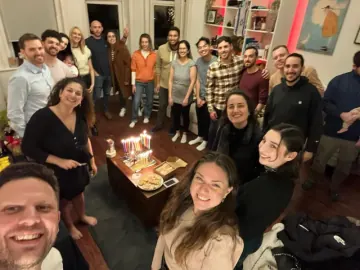
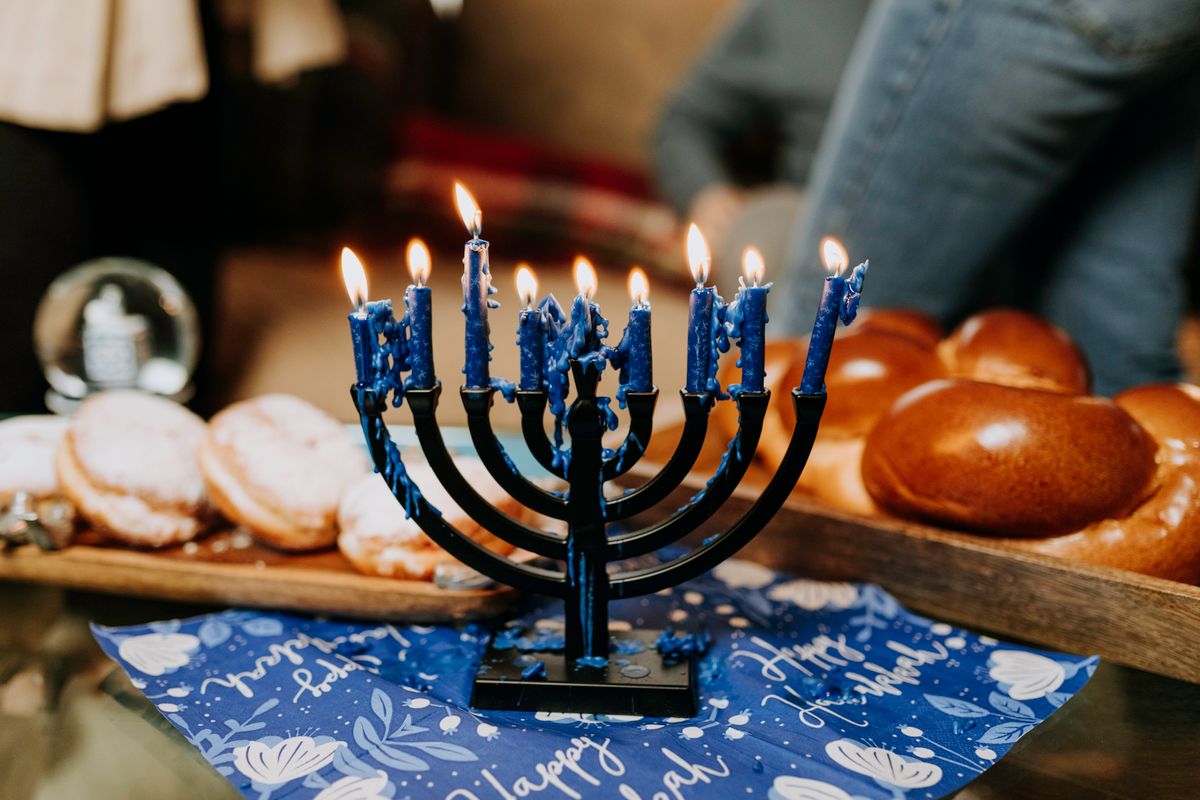
- Chanukah. Candles in the window against a dark that starts in the middle of the afternoon, sufganiyot, and communal lightings across the eight nights. There are public lightings around London, and the community holds its own, where the children take over.
- Purim. The party of the year. Costumes, mishloach manot, and a room that takes itself not remotely seriously. It is the loudest night on the calendar and the easiest one to bring along a friend who has never been to anything.
- Pesach. Seder tables that stretch to fit whoever has nowhere to go, because a seder with strangers who quickly stop being strangers is its own kind of magic. Ask about a seat well before the chag rather than in the final week. The shopping is a project in itself, and the Israeli food map is where to find what you need.
Underneath all of them runs the weekly Friday night dinner, the fixed point the chagim hang off. The holidays are the peaks; Friday is the ground you stand on between them.
The quieter dates in the year
Not everything on the calendar is a party or a ceremony, and the smaller dates are often where a community shows itself.
- Yom Hashoah. Marked with ceremonies, and the UK holds its own Holocaust Memorial Day in the winter as well, so there are two moments here rather than one.
- Tu Bishvat. A Tu Bishvat seder, or a planting with the children, and a welcome excuse in the middle of a British winter.
- Lag Ba’omer. The one that changes shape abroad, since a bonfire needs permission and space that a London park will not give you. A picnic or a barbecue does the job.
- Shavuot. Cheesecake, a dairy table, and a late-night learning session for anyone who wants one.
Between all of these sit the culture nights, talks, picnics and socials that fill the ordinary weeks. What is on across London is the running view of that, and for the circles that meet year round rather than at the chagim, the map of social groups sorts them by life stage and interest, with a separate guide for the twenties and thirties.
Where the chagim happen in London
There is no single Israeli square in London, but there is a clear centre of gravity. Jewish north-west London, Golders Green and Hendon and Finchley and the streets around them, is where most of what we run takes place, and it is also where to do the shopping in the week before a chag. The neighbourhood guide goes area by area if you are still working out where to live.
That said, plenty of people cross the city for a ceremony or a seder and treat the journey as part of it. For anyone studying here, campus is its own route into the chagim, and the students guide covers that ground.
The one practical trap is that the dates move against the English calendar, so a chag can land mid-week with no warning from the world around you. Look ahead, book the things that need booking, and ask early for a seder seat. One message to Ari and somebody will tell you where to be for any chag, or write to [email protected].
Being far from home during the chagim is real, and we will not pretend otherwise. But you do not have to carry the calendar alone. There is a room, there is a table, and there is a chair with your name on it.
Common questions
Where can I celebrate Jewish and Israeli holidays in London?
With a community is the simplest answer. HBayit marks the full round, from Yom Hazikaron and Yom Ha'atzmaut through Chanukah, Purim and Pesach, and most of the bigger gatherings we run happen around Jewish north-west London. Synagogues, JW3 and the university societies also run programmes around the chagim, so for any given one there is usually more than one room to choose from.
Where can I celebrate Yom Ha'atzmaut in London?
HBayit holds a Yom Ha'atzmaut celebration, and it falls the evening after the Yom Hazikaron ceremony, so the two sit in the order they are felt in Israel. There are larger public celebrations across London as well. The warmest room tends to be the one full of Israelis who know exactly what the day carries.
Is there a Yom Hazikaron ceremony in London?
Yes. HBayit holds a ceremony in Hebrew, with the songs, the readings and the names. Other London organisations hold their own as well, so it is worth checking what is running near you. It is one of the hardest evenings to sit through alone in a foreign city, and one of the easiest to arrive at by yourself, because the whole room is carrying the same thing.
Where do Israelis spend Rosh Hashana and Yom Kippur in London?
North-west London has synagogue services for both, and the tunes often turn out to be the ones you grew up with. Alongside that, HBayit runs shared meals so that nobody sits down to the new year alone. If you need a seat at a table or a place to daven, ask and we will help you find one.
Where can I find a Pesach seder in London?
Ask early rather than in the last days before the chag. HBayit helps people find a table, whether that is a community seder or a place in somebody's home, and a seder table stretches to fit whoever has nowhere to go. One message is usually all it takes for nobody to end up on their own.
Is there a public Chanukah candle lighting in London?
Public candle lightings go up around London through the eight nights, and HBayit runs its own communal lighting where the children take over. The details go out on the events calendar and in the WhatsApp community.