
Jewish Charities in London: Who Does What, and How to Help
A map of the Jewish and Israeli charity world in London, sorted by what each kind of organisation is for, plus how to check one on the Charity Commission register, how Gift Aid makes the same donation worth more, and how volunteering actually starts.

HBayit Community
One of the quieter discoveries you make after moving from Israel is how much of Jewish and Israeli life in London is held up by charities. Back home a lot of it falls to the state and to the neighbourhood. Here, a dense web of organisations does that work instead, from national umbrella bodies down to a Friday night table with your name on it.
This is a map of who does what, so you know where to turn when something goes wrong, where to spend an evening, and where a small donation goes a long way. We run one corner of it ourselves, so we have gathered the wider picture here for anyone still finding their feet.
The kinds of organisation the community runs
The Jewish and Israeli scene in London is bigger and more organised than most newcomers expect, and it helps to sort it into families before you go looking for a specific name.
- Umbrella and representative bodies. These speak for the community as a whole and coordinate the rest, and they are who government talks to.
- Welfare and social care. The organisations that catch people when life gets hard, covering care for older people, disability, illness, crisis support and family services.
- Security. The community funds and runs its own security infrastructure, which is why there are trained volunteers outside communal events.
- Community centres and hubs. Physical places to simply be together, take a class, see a film or bring the children.
- Cultural and educational. Festivals, programmes and institutions that keep the culture living, from film and books to Hebrew and history.
- International relief. Humanitarian work overseas, run from here.
- Israeli-community groups. The smaller, warmer organisations built by and for Israelis abroad, where the language in the room is Hebrew and nobody has to explain what they miss. We are one of them.
The names most people encounter first
A handful of organisations come up in almost every conversation, and knowing what each one is for saves you asking the wrong one for help.
- Jewish Care is the leading health and social care charity for the community across London and the South East, running care homes, community centres and support services.
- Norwood, one of the oldest Jewish charities in the country, supports children, families and people with learning disabilities or autism.
- The Board of Deputies of British Jews is the elected representative body of the community and one of the oldest communal organisations in the country, liaising with government on its behalf.
- The Jewish Leadership Council brings together many of the largest Jewish charities so the community speaks with one voice on shared issues.
- UJIA connects British Jews with Israel through education and grant-making.
- World Jewish Relief carries out humanitarian work internationally.
- The Community Security Trust (CST) provides security for the Jewish community and records antisemitic incidents. If you have been to a communal event in London, you have almost certainly walked past their volunteers on the way in.
- JW3, on Finchley Road in NW3, is the best-known Jewish community centre in the city, with a theatre and cinema, a restaurant, classes and a busy public programme for every age group. It is a genuine gateway into Jewish and Israeli London and an easy first outing.
Beyond those, the community runs specialist charities for a long list of specific needs, including cancer support, mental health, bereavement, domestic abuse, employment and small business advice, help with paperwork and benefits, food and practical assistance for families, independent living, and youth movements. There is almost always an organisation for the thing you are dealing with, even when you have never heard its name. The two ways to find it are a search of the Charity Commission register by cause, and asking someone in the community, because somebody usually knows.
How to check a charity before you give
Everything about a registered charity in England and Wales is public, and looking it up takes two minutes.
Search the Charity Commission register by name or by registered charity number. You will see the charity’s stated purpose, who its trustees are, its income and expenditure, and whether its annual accounts and returns have been filed on time. Late filing is not proof of anything sinister, but a pattern of it is worth noticing.
Two habits are worth building. Look for the registered charity number on any appeal you are asked to give to, because registered charities display it and its absence is a fair question to ask. And be careful with anything that arrives by message with urgency attached, especially around a crisis, since appeals are exactly when people are most easily rushed. Giving directly through an organisation’s own site is always safer than through a forwarded link.
Gift Aid, and making the same donation go further
This is the part most people skip, and it is free money for the cause you already chose.
Gift Aid lets a UK charity reclaim the basic rate tax you already paid on the money you donated, adding roughly 25 pence for every pound at no extra cost to you. All it takes is ticking the declaration and confirming you are a UK taxpayer who has paid at least as much tax as is being reclaimed. One declaration can cover future donations too.
If you pay tax above the basic rate, there is a second half almost nobody claims. You can reclaim the difference between the basic rate and your own rate through self assessment, which either comes back to you or can be given onward. Either way the charity keeps the full uplift.
Two other routes are worth knowing. Payroll Giving takes the donation from your gross pay before tax, so the relief is immediate and there is nothing to reclaim, and some employers match what their staff give. And gifts to charity in a will are exempt from inheritance tax, which is why legacies matter so much to organisations of this size.
Volunteering, and how to start
Most organisations would rather have your hands than only your money, at least to begin with, and volunteering is also the fastest way to meet people and to see from the inside whether a place is for you.
- Ask directly. Most charities have far more roles than they ever advertise, and a short message asking what they actually need is more effective than waiting for a listing.
- Offer the skill you already have. Accounts, legal work, design, translation, a website, an evening of moving furniture. Professional time given free is worth several times its hours to a small organisation.
- Small and regular beats large and occasional. An hour every week that a charity can plan around is genuinely more useful than a one-off day.
- Expect a DBS check for anything involving children or vulnerable adults. The organisation arranges it and it is routine rather than a hurdle.
- Consider a trustee seat. Charities are governed by boards of volunteer trustees, and finance, legal, technology and fundraising experience are always in demand. It is a real commitment with real responsibilities, and it is one of the most useful things a professional can give.
Israeli-community organisations, including HBayit
Alongside the large charities sits a smaller world built specifically for Israelis, where you can arrive speaking Hebrew and be understood on the first try.
- Professional networks. There is a substantial Israeli tech and business community in London, with volunteer-run networks connecting founders, engineers and jobseekers. If work is your way in, our guides to Israeli founders in London and young professionals cover that world.
- Cultural and social groups. Groups that exist to keep an Israeli atmosphere going abroad, with talks, culture and conversation in Hebrew.
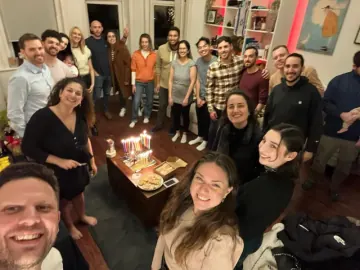
- HBayit. This is us. HBayit, הבית, is a registered charity, number 1217670, that has spent 8+ years building a home for Israelis in London: open-door Friday night dinners, holiday gatherings, and five communities (Young Professionals, Tech and Business, Students, Young Families and New Mothers) so you land among people at the same stage of life. You can read more about who we are and how we started, and if the work speaks to you, supporting it keeps the table set for the next family off the plane.
For the fuller story of Israeli life in the city, our guide to the Israeli community in London is the place to go next, and if you have only just arrived, the moving to London guide is the practical starting point.
Choosing where to put your time or money
With this many organisations, the question is less which is best and more which one fits what you need right now.
Match the organisation to the need. For illness, care or a family crisis, the large welfare charities are built for exactly that and are used to being called by people who feel awkward calling. For belonging, a community centre or an Israeli-community group is the faster route, and our guides to Jewish social groups and what is on across London map that side properly. For a cause to back, the umbrella and relief bodies do the heavy lifting.
Give where you can see it, or give where it is needed most, but decide which. A donation to a small community charity is felt directly and locally. A donation to a large one buys scale and professional infrastructure. Both are legitimate, and knowing which you are doing makes the decision easier.
And just turn up. The simplest step of all. Come to an event, walk into JW3, sit down at a Friday dinner. You do not have to sign anything to belong.
This web of organisations is one of the best things about being Israeli in London. You do not need to know all of it on day one. You just need to know it is there, and that one open door is enough to begin.
Common questions
What are the main Jewish charities in London?
The community runs organisations for almost every need. Among the best known are Jewish Care, the leading health and social care charity for the community, and Norwood, which supports children, families and people with learning disabilities or autism. The Board of Deputies of British Jews and the Jewish Leadership Council are the main umbrella bodies. World Jewish Relief works on international humanitarian aid, UJIA connects British Jews with Israel through education and grant-making, and the Community Security Trust provides security for the community and records antisemitic incidents. Alongside these sit many smaller specialist charities and Israeli-community groups like ours.
Is there a Jewish community centre in London?
Yes. JW3 on Finchley Road is the best-known Jewish community centre in London, named after its NW3 postcode. It is a cross-communal space with a theatre, a cinema, a restaurant, classes and a full calendar of cultural and social events for every age, which makes it one of the easiest first outings for a newcomer. Many synagogues across north-west London also run social and family programmes that work as community hubs.
How do I check a Jewish charity before donating?
Look it up on the Charity Commission register, which is free and public. Search by name or registered charity number and you can see what the charity says it exists to do, who its trustees are, its income and spending, and whether its annual accounts have been filed on time. Registered charities show their number on their materials, so if you cannot find a number anywhere, that is worth asking about before you give.
What is Gift Aid, and does it cost me anything?
Gift Aid lets a UK charity reclaim the basic rate tax you already paid on your donation, which adds roughly 25 pence for every pound at no extra cost to you. You just tick the declaration and confirm you are a UK taxpayer who has paid at least as much tax as is being reclaimed. If you pay tax at a higher rate you can also claim the difference back yourself through self assessment, which many people never do.
How can I volunteer with a Jewish charity in London?
Ask the organisation directly, because most have more roles than they advertise. Regular, small commitments are usually worth more to a charity than an occasional grand gesture, and a professional skill given free is worth more still. Any role working with children or vulnerable adults will require a DBS check, which the organisation arranges. Charities are also governed by volunteer trustees, so if you have finance, legal, technology or fundraising experience, a trustee seat is a real way in.
Are there organisations specifically for Israelis in London?
Yes, and they are often the gentlest landing for a new arrival because the language in the room is Hebrew. There are volunteer-run professional networks for Israelis in tech and business, cultural groups that keep an Israeli atmosphere going in Hebrew, and community charities like HBayit, a home for Israelis in London with open-door Friday dinners and communities for different life stages.